Demir the Typewriter
The Museum of InnocenceDemir the Typewriter is an Istanbul Greek screenwriter and script fixer whose skill lay in reshaping scripts to pass Turkey’s censorship board without losing their charm. A former boxer with an elegant sensibility, he softened stories’ harsh divisions and returned their most extreme moments to the innocent atmosphere of everyday life. His influence reaches the aspiring filmmakers around Füsun and Feridun through both his distinctive craft and the months-long delay before his household returns their screenplay.
Identity and Craft
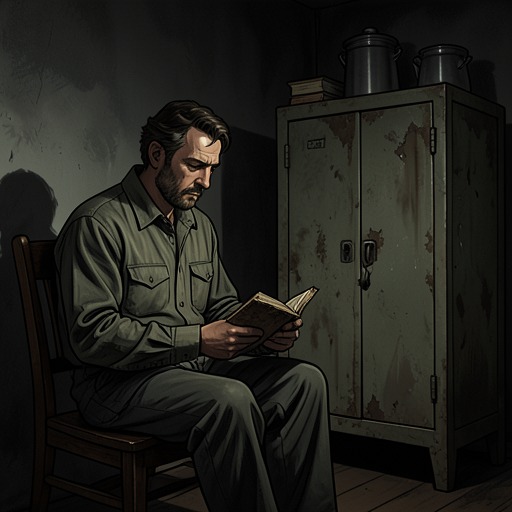
Hardworking and well-liked, Demir the Typewriter had once worn the uniform of the Kurtuluş team and was remembered as a hulking former boxer. The narrator’s description sets that physical presence against a refined character and elegant soul. His reputation rested on the old Remington on which he rewrote screenplays, giving him the nickname that made the typewriter as central to his identity as the man at its keys.
His method was to inoculate a script against censorship by recasting it in his own style. He rounded off sharp corners and softened divisions between rich and poor, worker and boss, rapist and victim, virtue and evil. If a hero’s final words risked offending the board, Demir could offset them with familiar praise of the flag, the nation, Atatürk, and Allah. The revision did more than remove material likely to provoke censors: it changed the story’s tone, making its most vulgar or extreme moments feel light and witty, as if they belonged to the innocent charm of daily life.
That quality made him valuable even to major firms accustomed to bribing the board. They entrusted him with scripts even when the material itself seemed unobjectionable, seeking the sweet aura of childish magic that he could add. His rewrites were therefore not merely a bureaucratic precaution; they supplied a recognizable, lyrical manner that filmmakers and audiences could value in its own right.
Censorship and the Screenplay Business
The censorship process could begin with a screenplay submitted for approval of its subject and the content of its scenes. As Kemal recalls, state permission brought with it a complex bureaucracy of permits and bribery, along with agents and agencies offering to guide applicants. In the spring of 1977, Kemal and Feridun sat smoking in the offices of Lemon Films, considering which agent to use for Blue Rain. Their search for a route through the system placed Demir’s craft within a wider industry where a film’s survival depended on navigating official scrutiny as well as making the work itself.
Demir’s own workload reflected the demand for that expertise. When Kemal, Füsun, and Feridun visited him in Kurtuluş, he welcomed them and offered to recast their screenplay if he liked it, but warned that the process would not be quick. A stack of project files lay between the kebab and fruit he had set out for his guests. His daughters, twin women in their twenties, sat at the far end of the large dining table, peering through owlish glasses at scripts their father had not found time to handle. He proudly said they had become even better than he was at getting screenplays into shape.
The Visit and Blue Rain
The visit made Demir’s reputation tangible. In a room filled with the ticking of an enormous wall clock, the three visitors saw the old Remington on which he had earned his name and sensed in the home the same magical aura they associated with the films he had rewritten. The clock and crowded work table gave the encounter its own measure of time: Demir’s method promised transformation, but the queue of scripts meant that transformation would take patience.
Füsun was delighted when the more buxom twin recognized her as a former finalist in the Milliyet National Beauty Contest. The recognition briefly connected her past public visibility with the hopes attached to the screenplay, even as Kemal observed that few others still remembered her. The twin later returned the script, rewritten and polished especially for Füsun. She relayed her father’s admiration by saying, “My father says this is a real European art film.” By then, however, three more months had passed. Füsun responded to the delay with pouts and occasional cross words, and Kemal reminded her that Feridun’s own work had been just as slow.
Narrative Role
Demir never becomes a regular presence in the household visits; his importance is concentrated in the production process that the visitors hope will turn a screenplay into a film. His work brings the pressures of state censorship into intimate contact with the characters’ artistic ambitions: an external system demands accommodation, while the script doctor’s personal style makes that accommodation feel like a transformation rather than a simple cut.
The delay also gives his influence a human scale. The screenplay passes through a family workshop, from the father’s celebrated Remington to the twin daughters who help manage his workload, before returning to Füsun with a compliment and the cost of three months’ waiting. Demir’s role thus joins craft, censorship, and time: he can reshape a story to make it acceptable, but even his celebrated skill cannot make the process immediate.